About me, briefly.



















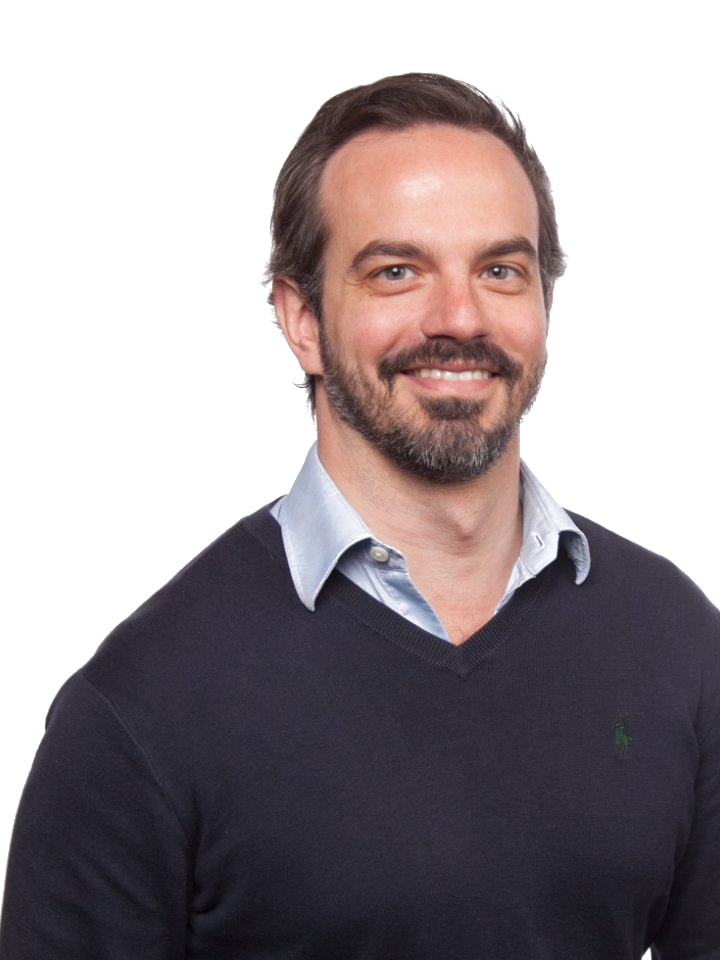

I coach senior product and technology leaders through the calls that test who they are. The work is to be clear about who you want to be in the call before you make the call.
The clients I work with most often fall into three patterns. Veterans navigating civilian high performance. Women leaning into their first executive-altitude seat. Founders and operators whose rooms carry real ethical weight. The patterns overlap as often as they separate.
Before this, I led at every altitude of American enterprise. Marine infantry captain in the early years of the Iraq war. Engagement manager at McKinsey. Chief product officer and chief information security officer of an AI-product company through a successful exit. Vice president at Salesforce. I hold an MBA from Kellogg, a master’s in computer science from DePaul, and twelve issued U.S. patents in artificial intelligence and natural-language generation.
I am also faculty at the U.S. Naval Academy, where I teach AI and Data Science in Robotics, and Moral Reasoning.
The method centers on Intent: the why behind every what. Ethics is the substrate, not a compliance overlay at the end. I am credentialed in the craft. Foundations complete through The Academies; certification with the International Coaching Federation in process. I learn from people far smarter than I have been, and I am not done.
How I work.
There are three layers to the work: the moves a senior leader has to make; the discernment to know which move the moment calls for; who you become as you keep making them.
The first session goes one layer down.
What you bring to the first session is rarely what we work on. The presenting problem is real, but it sits on top of something more useful: the pattern that keeps producing problems like it. Session one is for finding that, before anything else moves.
The work is in your week, not in our session.
Sessions are for diagnosis and naming. The reps are in the room you walk into Tuesday morning, the memo you draft Wednesday, the conversation you would normally have skipped. We design the move before. We examine what actually happened after. The next session builds on what you tried, not on what we discussed.
Surface the pattern while it is happening.
Advice is cheap and usually wrong, because the person giving it does not have your context. The leverage is in catching what you are doing while you are doing it: the move you reach for under pressure; the assumption you treat as fact; the conversation you keep postponing. Coaching is the second voice in the room that names it, so you can decide whether to keep it.
Let the work change who you are.
The capability we build early becomes a move you make consciously. By mid-arc it becomes the move you make first. By the end it is no longer something we are working on; it is how you operate. The end of an engagement is when the new way of leading has stopped feeling new.
What I keep writing about.
What I publish here are notes I am willing to make public. The drafts and the calls themselves stay private.
Write to me.
There is no intake form behind this; only this page, my reading of your note, and a reply.